

- Published: 13.10.2026.
State Secretary Metelko-Zgombić attends GAC
.jpg)
.jpg)
.jpg)
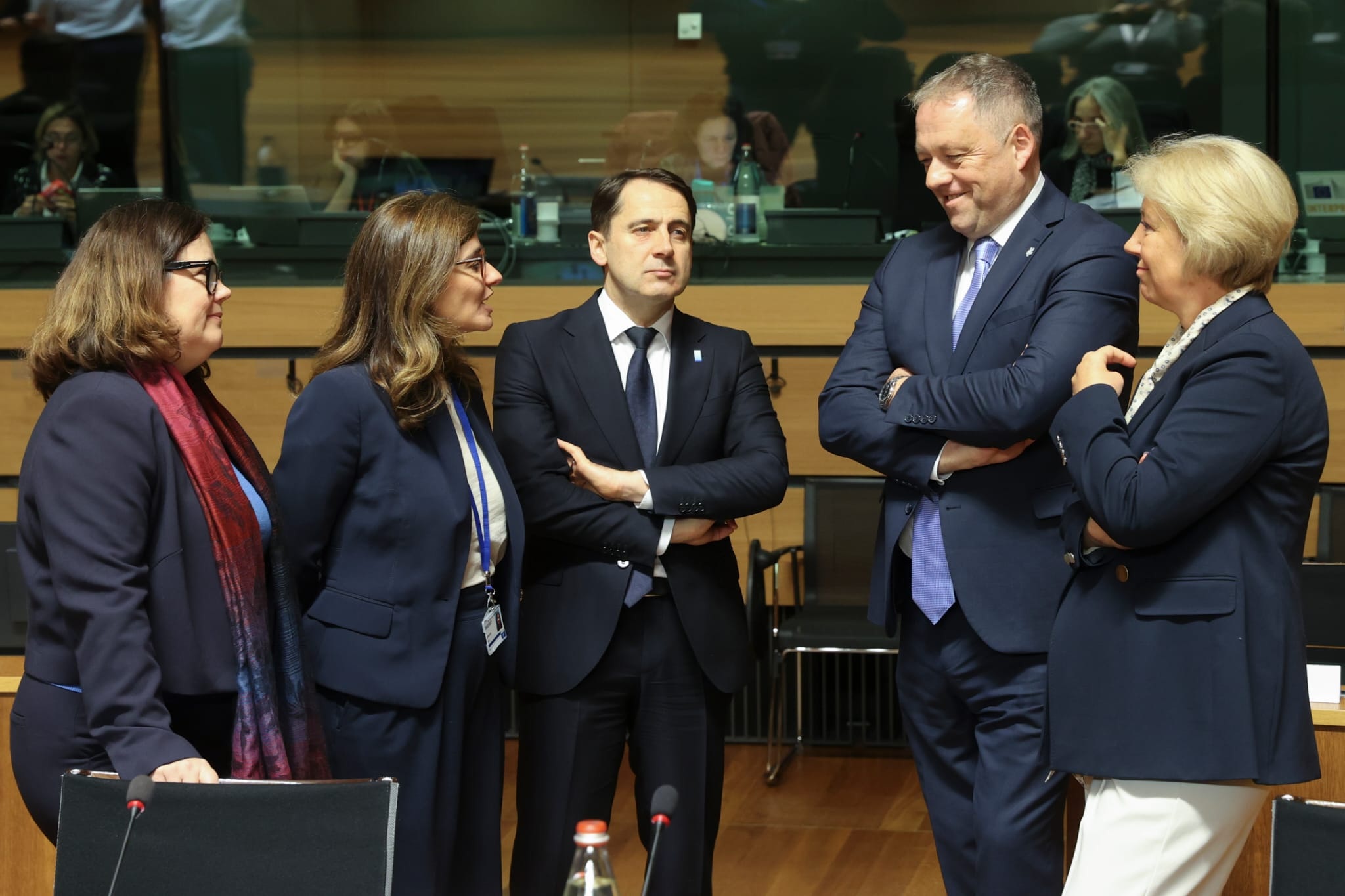
The Council discussed the revised Negotiating Box for the next MFF, published by the Irish Presidency on 10 October. The state secretary thanked the Irish Presidency for its efforts but stressed that Croatia could not be satisfied with the proposed 8% reduction in the overall MFF compared with the European Commission’s initial proposal. She recalled the letter of 2 October signed by the leaders of 17 Member States, calling for an ambitious and robust MFF that would enable the Union to achieve its strategic objectives. She emphasised that the Union could not address its growing number of shared priorities with fewer resources and that this was no time to scale back European ambitions.
She welcomed the preservation of national allocations for cohesion policy, the Common Agricultural Policy and the Common Fisheries Policy in the proposal, highlighting their contribution to balanced regional development, competitiveness, resilience, the Single Market and European sovereignty. She expressed regret over the proposed cuts to funding for strengthening European competitiveness and the Union’s global engagement, stressing that such demands must not leave the Union unable to finance common priorities. She also underlined the importance of ensuring visible pre-accession assistance for the Western Balkan countries, noting that the proposed reduction in funding for the Mediterranean, whose strategic importance continues to grow, could hamper the implementation of the Pact for the Mediterranean.
The Irish Presidency reported on progress in negotiations on legislative proposals under the omnibus packages aimed at simplifying EU legislation. Since the previous discussion, the Council had agreed negotiating mandates for the proposals under Omnibus VIII on permitting and Omnibus X on food and feed safety, while an agreement had been reached with the European Parliament on the acts under Omnibus V on defence readiness.
The Council finalised preparations for the European Council meeting on 15-16 October, at which EU leaders will discuss competitiveness, Ukraine, the MFF, the Middle East, European defence and security, migration, and EU enlargement and reforms. The state secretary focused in particular on competitiveness, Ukraine and enlargement.
On competitiveness, she stressed the crucial importance of affordable and competitive energy prices and security of supply for Europe’s competitiveness, alongside continued efforts to diversify energy sources, develop renewables, strengthen infrastructure and improve regional interconnections. She reaffirmed Croatia’s commitment to implementing the “One Europe, One Market” plan, emphasising that new legislation must be effective and implementable. She also called on the European Commission to present, as soon as possible, a legislative proposal to eliminate territorial supply constraints.
Regarding Ukraine, she underlined the importance of continuing comprehensive support, particularly military and financial assistance, maintaining pressure on Russia and consistently implementing sanctions. She expressed concern over the intensification of Russian hybrid activities aimed at destabilising Member States and stressed the need to strengthen intelligence sharing.
On enlargement, she emphasised that Croatia supports an ambitious and credible merit-based process, and that geopolitical considerations cannot replace the implementation of reforms and fulfilment of the membership criteria. Safeguards and measures in response to possible democratic backsliding in candidate countries should be proportionate and tailored to individual cases.
The European Commission presented the state of play regarding the rule of law and the procedure initiated by the European Parliament against Hungary in 2018 under Article 7(1) of the Treaty on European Union.
The Council approved Conclusions on inclusive democratic participation and societal and community resilience. The Conclusions encourage more inclusive and transparent decision-making, greater public trust in democratic institutions, and stronger participation by citizens and civil society in the democratic life of the Union.