

- Published: 25.09.2026.
Croatia a reliable partner in strengthening security, multilateralism, energy resilience
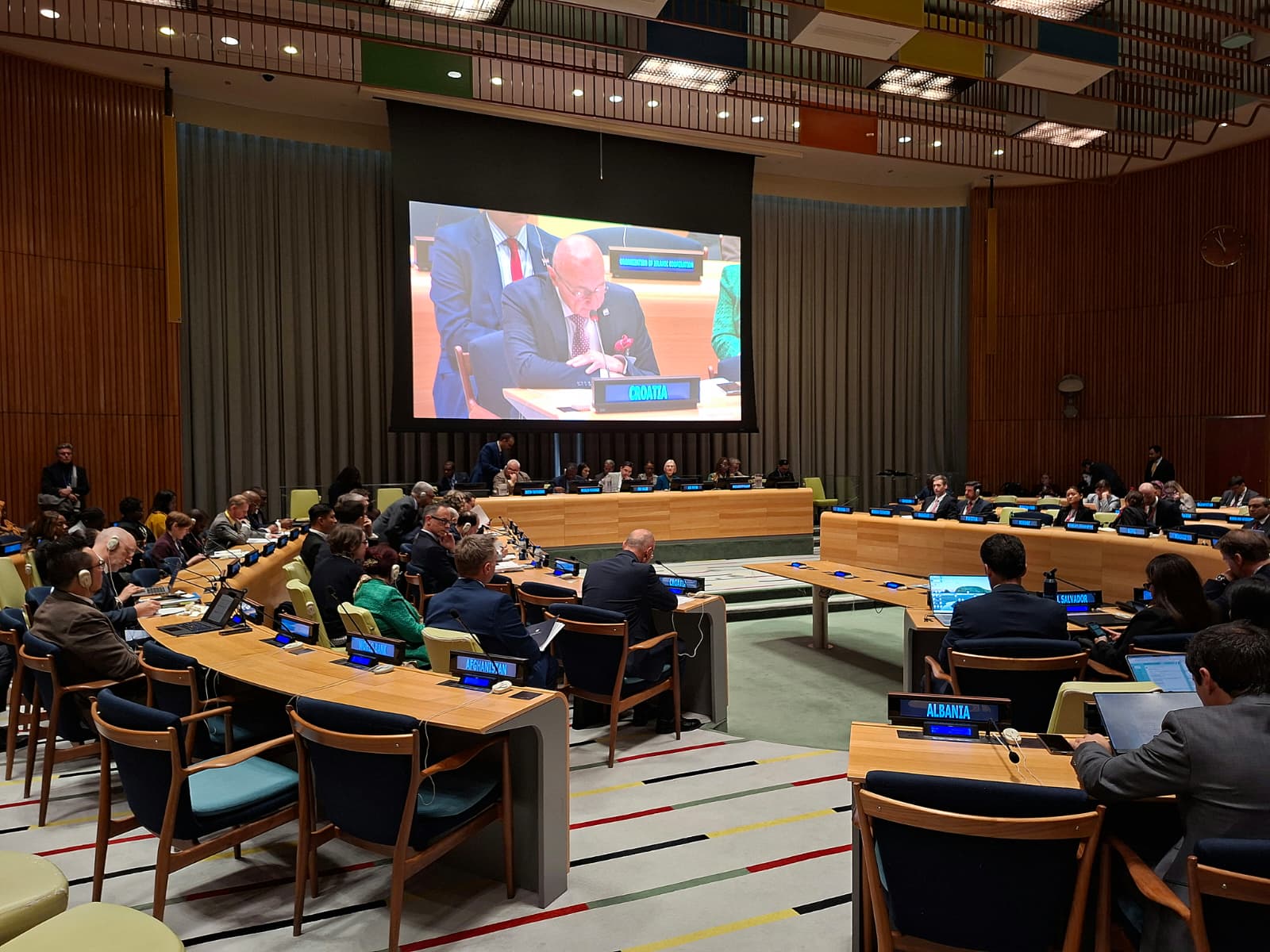
“We had substantive meetings and dynamic discussions at all levels during the 81st session of the UN General Assembly. There were a great many multilateral meetings, primarily with our allies from the European Union and the United States, our partners from the Indo-Pacific, the Middle East and Asia, as well as, of course, Africa,” Grlić Radman said in a statement to the press.
Against the backdrop of geopolitical divisions, wars and insecurity around the world, “our message here is that space for dialogue must be ensured”, he said.
The minister noted that Prime Minister Plenković had participated in the Partners for Multilateralism Summit, where he delivered a notable address. The summit is part of a new international diplomatic initiative launched on the margins of the UN General Assembly with the aim of strengthening international law, upholding the UN Charter and finding common, practical solutions to global challenges.
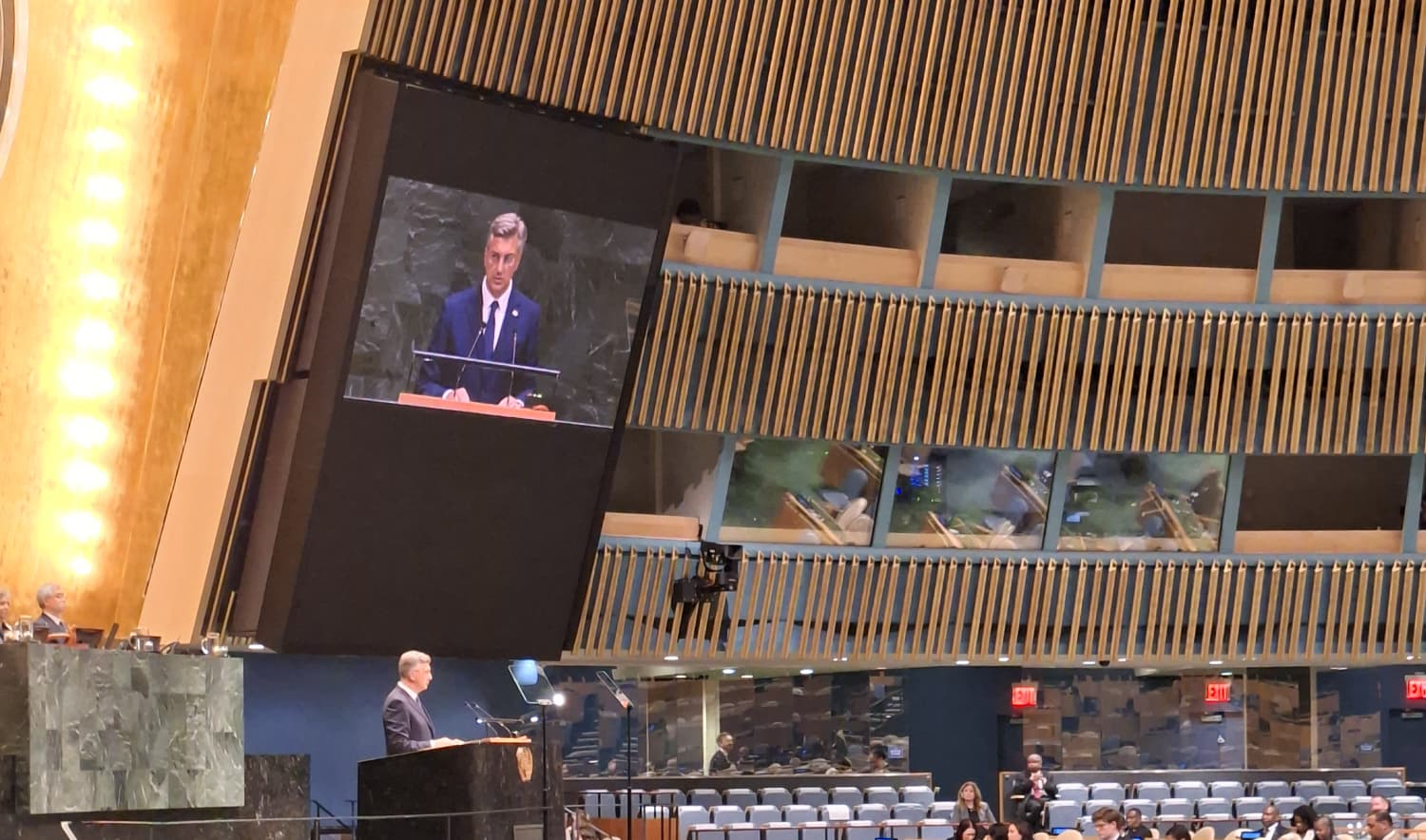
He also highlighted the prime minister’s address to the UN General Assembly, in which he spoke about the need to strengthen dialogue and cooperation and respect for international law in the face of numerous threats to international peace and security.
“He also stressed the importance of respecting security in Southeast Europe. You saw that he also said there is no place for the glorification of war crimes,” the minister said. “He also underscored the importance of stability in Bosnia and Herzegovina, which rests on the equality of its three constituent peoples,” Grlić Radman added.
“We hope that the upcoming elections will finally put an end to a situation in which Croats have not had the opportunity to elect their own representative. This is why certain limited constitutional amendments are necessary, as is a change to the electoral law,” he said.
In New York, the minister participated in several multilateral forums that are key to Croatia’s visibility, two of which Croatia co-chaired.
“In the Peacebuilding Coalition, we highlighted the importance of strengthening institutions and cooperation, as well as Croatia’s experience of the Homeland War and mine clearance. I said that we are still searching for 1,725 missing persons and that Croatia was a victim of aggression,” he said.
He also said that, together with his Italian counterpart Antonio Tajani, he had chaired the second meeting of the MED9++ Coalition for Fertiliser Access and Food Security, at which the opening of the Strait of Hormuz was called for.
The Rome Coalition for Fertiliser Access and Food Security was launched in Rome on 7 May 2026 at the initiative of Croatia and Italy. The Coalition was established as an urgent diplomatic and economic response to the geopolitical crisis in the Middle East and the disruption of traffic through the Strait of Hormuz, which directly threatens global food supply chains and energy security.
“Croatia is a good example when it comes to energy, as it has secured alternative supply routes. Croatia is energy-independent and, through its LNG terminal and JANAF, can supply other countries with both gas and oil. We highlighted this at other forums as well,” the minister said.
Grlić Radman also chaired a meeting of the Adriatic Charter, a security and defence platform established in 2003 at the initiative of the United States, which Croatia is chairing this year.
Over the nearly two decades since its establishment, the Adriatic Charter has established itself as an important security and defence initiative and an instrument for strengthening regional cooperation and supporting the Euro-Atlantic aspirations of Southeast European countries.
The priorities of the Croatian chairmanship include strengthening military-civilian cooperation, which is key to addressing modern, multidimensional security challenges and hybrid threats. Emphasis is also being placed on strengthening resilience and energy security, including finding stable and secure energy sources and exploring possible cooperation on the diversification of energy supplies.
The minister stressed that, in the 23 years since the initiative was established, Croatia had become a member of the EU and NATO and supported their enlargement to other Southeast European countries, based on their individual merits and fulfilment of the required conditions.
On the margins of the UN General Assembly, Grlić Radman also held numerous bilateral meetings.
“At all these meetings, Croatia’s good reputation and its standing as a good example are consistently reaffirmed,” he said, adding that he had primarily discussed opening up new markets for the Croatian economy with representatives of other countries.